
Comprehensive Brush Cutter Harvesting & Maintenance Guide: Troubleshooting, Blade Selection & Engine Care
Complete field troubleshooting and maintenance guide for 2-stroke and 4-stroke brush cutters: vibration diagnosis, fuel mixing, blade selection, gearhead greasing, and engine longevity.
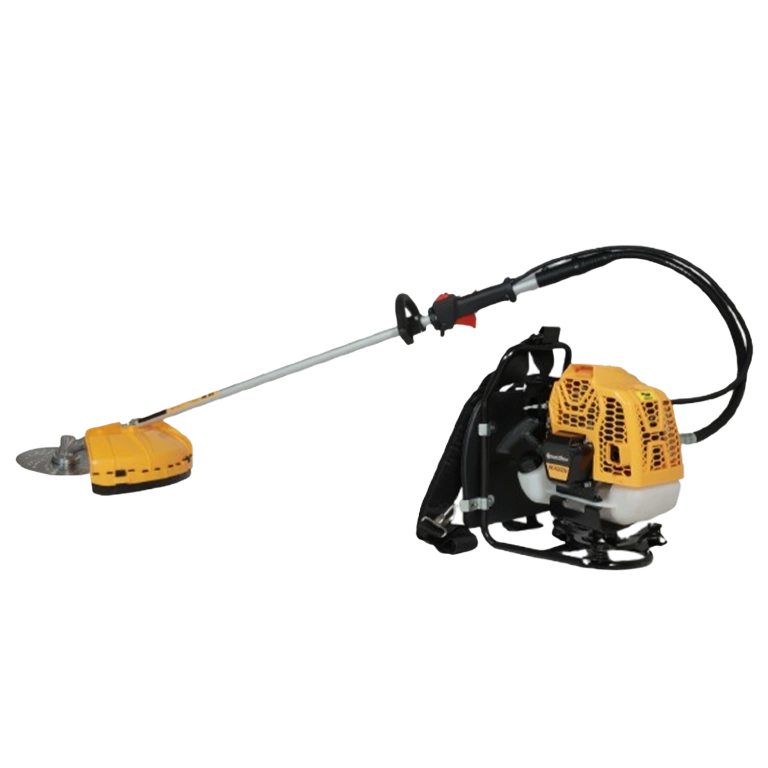
Overview: High-RPM Brush Cutter Operations in Agriculture
Agricultural brush cutters operate at crankshaft speeds between 7,500 and 9,500 RPM to cleanly cut standing paddy, wheat stubble, sugarcane shoots, and thick pasture grass. At these elevated RPMs, mechanical tolerances are tight. Imbalanced cutting attachments, improper 2T oil pre-mixing, or insufficient gearhead lubrication can lead to catastrophic engine seizure, bevel gear tooth stripping, or driveshaft failure within hours.
This comprehensive guide brings together field-tested diagnostic protocols, factory maintenance matrices, and blade pairing recommendations developed across thousands of hours of harvesting operations in Indian conditions.
1. 2-Stroke & 4-Stroke Fuel Management
The 2-Stroke 2T Pre-Mix Protocol
Running an incorrect fuel-oil mixture is the leading cause of premature 2-stroke brush cutter failure:
- •Break-in Period (First 10 Hours): Mix at 1:25 (40 ml 2T oil per 1 Litre of clean unleaded petrol).
- •Standard Operation: Mix at 1:40 (25 ml 2T oil per 1 Litre petrol) using high-grade JASO-FD synthetic 2T oil.
- •Never Run Pure Petrol: Running pure unmixed petrol will score the piston cylinder wall and seize the crank bearing in less than 10 minutes.
- •Mix in a Dedicated Can: Always mix fuel and oil thoroughly in a separate container before pouring into the fuel tank through a fine mesh strainer. Never pour raw oil directly into the machine tank.
- •Fresh Fuel Rule: Drain the carburetor float bowl or primer bulb if the machine will sit idle for more than 15 days to prevent ethanol varnish from clogging micro-jets.
4-Stroke Engine Sump Care (GX35 / GX50 Class)
- •Dedicated Oil Sump: Check the 20W-40 or 10W-30 engine oil level before every shift using the dipstick.
- •Operating Angle: While 4-stroke multi-position engines can operate at steep angles, do not store the machine upside down, which can flood the cylinder head and spark plug with crankcase oil.
2. Cutting Attachment & Blade Selection Guide
| Crop / Vegetation | Recommended Attachment | Operating RPM | Field Objective |
|---|---|---|---|
| Standing Paddy & Wheat | 80T / 100T Tungsten Carbide-Tipped (TCT) Blade with Crop Collector Baffle | 7,500 – 8,500 | Clean base cut without grain shattering; neatly lays stems in windrows |
| Coarse Weeds & Brush | 3-Tooth Heavy High-Carbon Steel Blade | 8,000 – 9,000 | High-inertia cutting through woody stems up to 1.5 cm diameter |
| Soft Lawn Grass & Bund Weeding | 2.4mm / 3.0mm Square Nylon Tap-and-Go Trimmer Head | 6,500 – 7,500 | Safe cutting along irrigation pipes, brick borders, and fruit tree trunks |
| Dense Shrubs & Pruning | Circular 40T Chisel Tooth Saw Blade | 8,500 – 9,500 | Forestry clearing and young sapling thinning |
| Inter-Row Soil Weeding | Mini Tiller Rotary Attachment (9-spline) | 4,500 – 6,000 | Shallow weeding and aeration between closely spaced vegetable beds |
3. Systematic Field Diagnostic & Troubleshooting Matrix
A. Severe Handlebar Vibration
- •Bent or Chipped Blade: Even a 2-gram weight discrepancy on a rotating blade creates severe harmonic vibration at 8,000 RPM. Immediately stop the engine and balance or replace the blade.
- •Worn Shaft Bushings: Inspect the 5 to 6 internal rubber damping bushings inside the aluminum outer tube. Replace if worn or oil-softened.
- •Loose Gearhead Bolts: Verify that the two pinch bolts clamping the gearhead to the outer tube are torqued to 8–10 Nm.
B. Engine Bogs Down Under Cutting Load
- •Carburetor Metering Diaphragm Stiffened: Ethanol in modern fuel stiffens the flexible rubber diaphragm, restricting fuel flow at full throttle. Install an OEM replacement carburetor diaphragm kit.
- •Spark Arrestor / Muffler Clogged with Carbon: 2-stroke exhaust ports and spark arrestor screens accumulate unburnt oil carbon. Clean with a wire brush or soak in solvent.
- •Air Filter Saturated: Clean foam pre-filters with warm soapy water, dry thoroughly, and apply two drops of clean engine oil.
C. Cutting Head Does Not Rotate (Engine Revs High)
- •Centrifugal Clutch Failure: Clutch shoe friction lining worn down to bare metal, or clutch spring broken. Replace clutch shoe assembly.
- •Stripped Drive Shaft Spline: Check the 7-spline or 9-spline drive shaft ends and the mating gearbox input pinion. Replace if splines are rounded off.
- •Seized Gearbox Bevel Gears: Lack of grease causes bevel gears to weld together under frictional heat.
4. Maintenance Matrix & Lubrication Protocols
| Component | Lubrication / Inspection Point | Recommended Specification | Frequency |
|---|---|---|---|
| Gear Head | Angled Grease Port | High-Temperature Molybdenum Disulphide (EP-2) | Inject 15g every 15 operating hours |
| Drive Shaft | Solid or Flexible Inner Steel Shaft | Heavy Chassis Lithium Grease | Grease full shaft length every 40 hours |
| Air Cleaner | Foam Sponge / Paper Element | Soap-wash foam / blow air on paper | Clean daily during dusty field harvest |
| Spark Plug | Electrode Gap & Color | Clean carbon; set gap to 0.6–0.7 mm | Inspect every 25 hours; replace every 100 hours |
| Arbor Flange Nut | M10 x 1.25 Left-Hand Thread (LHT) | Flanged lock nut with bottom guard cup | Replace lock nut every 5 blade changes |
5. Frequently Asked Field Questions
Q: Why does the brush cutter engine cut out when tilted sideways?
Resolution: This is typically caused by a stiffened fuel tank pickup clunk filter hanging above the fuel level, or air entering a cracked fuel primer line. Inspect the flexible fuel lines and ensure the weighted fuel filter rests at the lowest corner of the fuel tank.
Q: Can I sharpen an 80T carbide-tipped blade with an angle grinder?
Resolution: Use caution. Carbide tips require a diamond-coated grinding wheel; standard aluminum oxide grinding discs will overheat and shatter the brittle tungsten carbide brazing. Touch up lightly with a diamond hand file or replace when tips are missing.
Q: What is the benefit of a backpack (BP) brush cutter over a side-pack straight shaft model?
Resolution: Backpack brush cutters transfer the 8–10 kg engine weight to the operator's back and shoulders via padded harnesses, dramatically reducing fatigue during 6-to-8 hour harvesting shifts on paddy bunds and terraced hillsides.
Direct B2B Dispatch & Fitment Confirmation
Contact our engineering and dispatch desk in Jaipur for original carburetor jets, recoil assemblies, blade sets, and gearbox components.