
Why Your Power Weeder Won't Start: 7 Field Fixes for Recoil Pull Resistance
Diagnose why your 7HP petrol or diesel power weeder won't start: hydro-lock, stiff recoil rope, flooded carburetor, spark plug fouling, and fuel cock blockage.
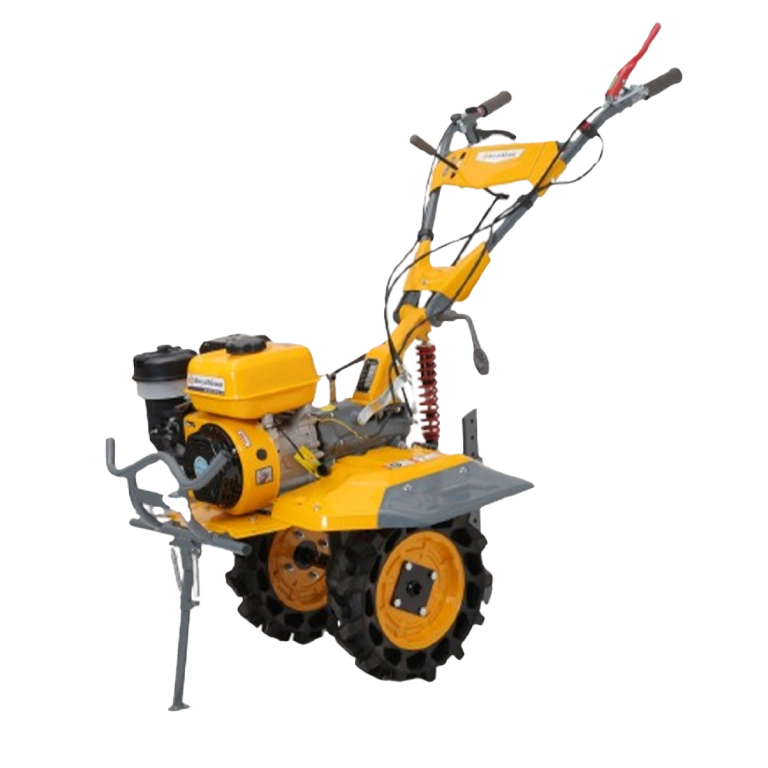
When a power weeder refuses to start in the field, 90% of farmers repeatedly jerk the recoil starter, often snapping the starter cord or damaging the pawl assembly.
Step 1: Check Recoil Pull Resistance
If the recoil rope is stiff and will not pull smoothly:
- •Hydro-lock Check: If the machine was tilted forward during transport, engine oil or fuel may have seeped above the piston head. Remove the spark plug and pull the recoil 5 times to eject excess oil/fuel from the cylinder.
- •Decompression Lever (Diesel Only): On diesel weeders (KG-/186F), you must engage the decompression lever before pulling to relieve the high cylinder pressure.
Step 2: Spark Plug Diagnostics (Petrol)
Unscrew the spark plug with a 16mm socket:
- •Black Soot (Carbon Fouling): Clean with emery paper or a wire brush. Gap must be 0.7mm–0.8mm.
- •Wet with Petrol (Engine Flooded): Close the fuel cock, open the choke fully, pull the starter 10 times to air out the cylinder, reinstall the plug, and crank.
- •No Spark: Test spark against the engine block. If no blue spark appears, inspect the ignition coil gap (standard 0.3mm business card thickness) or check if the low-oil alert sensor has grounded the ignition.
Step 3: Fuel Stagnation & Water Contamination
Petrol stored in plastic jerry cans in the sun forms varnish within 3 weeks, clogging the pilot jet. Drain the carburetor float bowl using the 10mm drain bolt until clean fresh fuel flows out.
Technical Engineering Context & Field Dynamics
Small air-cooled single-cylinder petrol and diesel engines powering agricultural machinery demand strict attention to combustion timing, valve clearances, and clean filtration. Operating in high-dust harvest environments, small engines lose compression rapidly if air filters or fuel sediment systems are neglected.
Factory Tolerance & Recommended Maintenance Matrix
| Engine Maintenance Parameter | Standard Value (Petrol / Diesel) | Adjustment Frequency |
|---|---|---|
| Valve Clearance (Cold) | Intake: 0.15 mm ± 0.02 mm | Exhaust: 0.20 mm ± 0.02 mm |
| Cylinder Compression Pressure | 85 – 115 PSI (Petrol 210cc) | 280 – 340 PSI (Diesel 173F) |
| Air Filter Oil Bath Depth | 10 mm – 15 mm clean engine oil in plastic cup | Clean sediment and replace oil every 20 field hours |
| Ignition Coil Flywheel Air Gap | 0.35 mm (approx. thickness of a standard business card) | Set using non-magnetic brass feeler gauge |
OEM Spare Parts & Workshop Specifications
For agricultural workshops, mechanics, and equipment dealers across India, maintaining accurate engineering tolerances is vital. When replacing worn mechanical assemblies, always ensure parts meet certified metallurgical and dimensional standards:
- •Surface Hardening: Cultivator tines, auger tips, and drive shafts must carry induction hardening (HRC 48–52) to resist abrasion in quartz and gravel soils.
- •Viton Seals: Use double-lip Viton oil seals on rotor output shafts to withstand high soil friction and prevent oil contamination.
- •Genuine Fitment Guarantee: KrishiGears provides fitment-verified spare parts for all standard 7HP, 9HP petrol engines, KG-/186F diesel models, and 52cc/63cc 2-stroke equipment with PAN-India express dispatch.
Frequently Asked Field Questions & Expert Answers
Q: How do I know if my engine has blown piston rings or a bad valve seal?
Expert Resolution: Bluish exhaust smoke under heavy throttle indicates worn piston rings burning oil. White smoke on cold start that disappears after warming up is normal moisture; persistent dense white smoke suggests fuel contamination.
Q: Why does my engine backfire through the carburetor?
Expert Resolution: Backfiring through the intake indicates an overly lean fuel mixture, a sticking intake valve, or retarded ignition timing from a sheared flywheel woodruff key.
Q: How do I store a farm machinery engine over the off-season?
Expert Resolution: Drain the fuel tank and run the engine until the carburetor bowl is completely dry. Remove the spark plug, inject 5ml of clean engine oil into the cylinder, pull the recoil 3 times to coat the bore, and store with valves closed.
Direct B2B Dispatch & Fitment Confirmation
Contact our engineering and dispatch desk in Jaipur for original carburetor jets, recoil assemblies, blade sets, and gearbox components.